Chants of Sennaar - Language as Puzzles
8/29/2025 - Game - Created by Rundisc
#puzzle #game #critique #linguistics
[
Introduction
Chants of Sennaar is a point-and-click puzzle game set in a Tower of Babel-esque world where you do not speak any of the languages. The main gameplay is traveling throughout the tower, speaking with the local people, and translating their languages. You will solve minor puzzles, collect items, and use machines to progress as well. Like Return of the Obra Dinn, Blue Prince, and Outer Wilds, it is a game that heavily revolves around knowledge of the world, so this review will contain spoilers.
Overall, Chants of Sennaar is an enjoyable game, and I would recommend it for people who want a different kind of experience. Even if my criticism will appear harsh, I feel like players would get a lot out of it. This is a really good game to develop your own game criticism skills, both in comparison to its peers and to how its mechanics fundamentally work.
Gameplay
The main gameplay loop of Chants of Sennaar is based around translating the local languages in order to find the exit and ascend higher into the tower. For example, you have a door and a lever with a sign next to it with two statements, with the statement only sharing one glyph. As the player, you can use your notebook interface to track these glyphs automatically when you see them, and you can type in what you think they are.
With this first puzzle, it’s obvious that the second symbol means “door” and the first two are “open” and “close”, but you as the player have to write down that meaning and use the puzzle to confirm it. This is the main loop of the game, finding a statement, deducing its meaning, and testing that hypothesis in the world.
Sometimes this loop is broken up by separate mechanics, which can be either annoying in difficulty such as the stealth sections, or annoying in that they are sliding block puzzles. They are just another way to dress up getting a key for a door, and feel off in a game that is largely based on knowledge-based language puzzles.
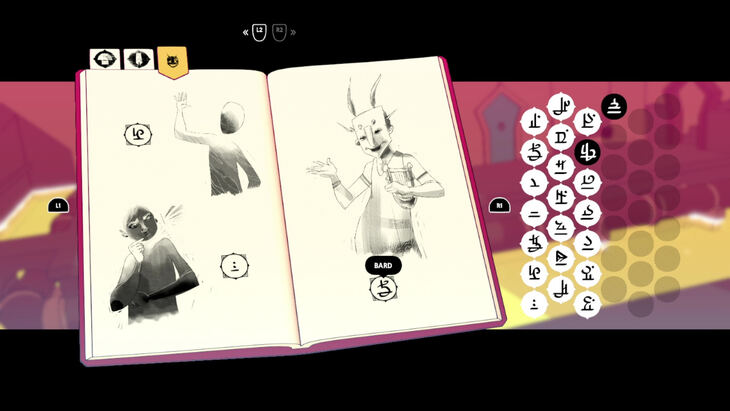
As you get more glyphs to learn, you draw concepts in a journal, which you can drag and drop glyphs to these drawing to guess its meaning. Using the previous example, the game lets you confirm your translation of “open” and “close” and “door”, and when you hover over glyphs in the game from then on, instead of your grayed out guesses, the game bolds them and translates for you.

This gameplay loop is incredibly rewarding. Because most of the puzzles focus on your knowledge and the deductions you make, it makes you feel like a genius whenever you figure something out. Of course a downside is sometimes if you can’t figure it out, you feel bad, but those moments never stuck out to me for long.
Aesthetics
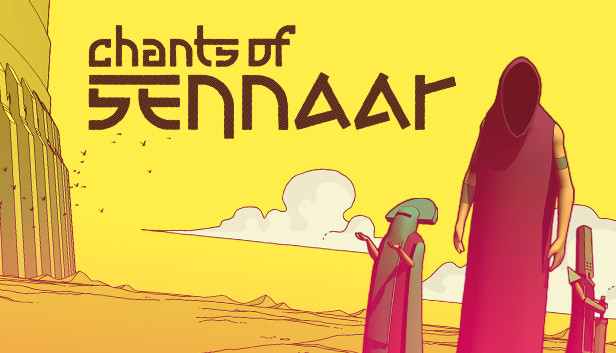
The visual and sound design are very good, the game is simply a treat to look at, with many of the tableau’s being intentionally framed or designed so that the artists can make an evocative and mythical world. The art style is frankly gorgeous, it has a lovely Moebius-esque shading and coloring, and the lighting and color choices very clearly delineates the different areas but also gives the game a very unique identity. The UI is clean and unintrusive, and the design of language glyphs works in every context, from the UI to stone carvings.

Story
From a story perspective, it is very simple in its message of language bringing people together and everyone sharing meaning from their world. The shape at top of the tower, what the locals call “God”, “Duty”, “Beauty”, etc… being all related through their glyphs, connecting the languages together, is very cool and a very good piece of visual storytelling. However it is a little too simple and trite, it very much feels like the actual plot was grafted on near the end of development with the theme of “togetherness” as its connective tissue.
–edit this to explain story more and include images
The little moments do stand out, I really like the moment where you play hide and seek with a little girl and learning some of the stealth mechanics, and I like the late game puzzles where you translate between languages, causing people to travel between the tower again. You get a lot of the little tableaus, like when the gate guards, an earlier road block, open the gate up because they learn that the Devotee’s play music like the Bards. These make the world feel alive and reactive.
Critique
Before I delve into my criticisms, I am not a linguist, or a fan of conlangs (constructed languages), so please take my criticisms of the languages and systems with a grain of salt. I only speak a little German and I can read and write Latin. I feel like my experience learning languages is relevant to the gameplay structure and it’s themes.
On that note, a lot of the game did give me that feeling of translating, for me that is nostalgic and takes me back to a bright part of my high school years. The game can, at times, tap into that feeling of succeeding in translating, however it is ultimately not very deep. Chants of Sennaar focuses on the vocabulary and the minor grammatical syntax of a language, with a later focus on a number system for a couple puzzles. It’s conversations are also never that long, from my background of learning intermediate Latin with Julius Caesar’s Gallic War, the first sentence is more complex grammatically than the hardest puzzles here. [1]
Mechanically, I find that the game is unfortunately shallow and flat. As someone who knows a couple languages at or below a conversational level, the game felt simple. It was like a simulacrum of language learning, sort of like a toddler’s toy where you fit blocks into the right shaped hole. This isn’t necessarily bad, it’s a fun gameplay loop! However in my experience the game has major difficulty spikes when it introduces grammatical quirks because of this focus on vocabulary. For example, in the 3rd language, I realized quickly that negation of a statement is done by using the same symbol at the beginning and end of a statement. However I could not figure out what the similar structure in sentences was until I had to look up a walkthrough. It ended up being how the language denotes a question. Because the previous vocabular-focused languages had question words, I literally could not comprehend the puzzle.
I think a reason this disappoints me is that the game’s 3rd language is very explicitly invoking scripts such as Devanagari, which would be a very cool opportunity to represent different written languages. But, because of the design of the game, it ultimately feels like grammar and structure are secondary, and that the languages are just aesthetic puzzles. Every language is left to right, top to bottom, with all but one having a subject, verb, object structure.
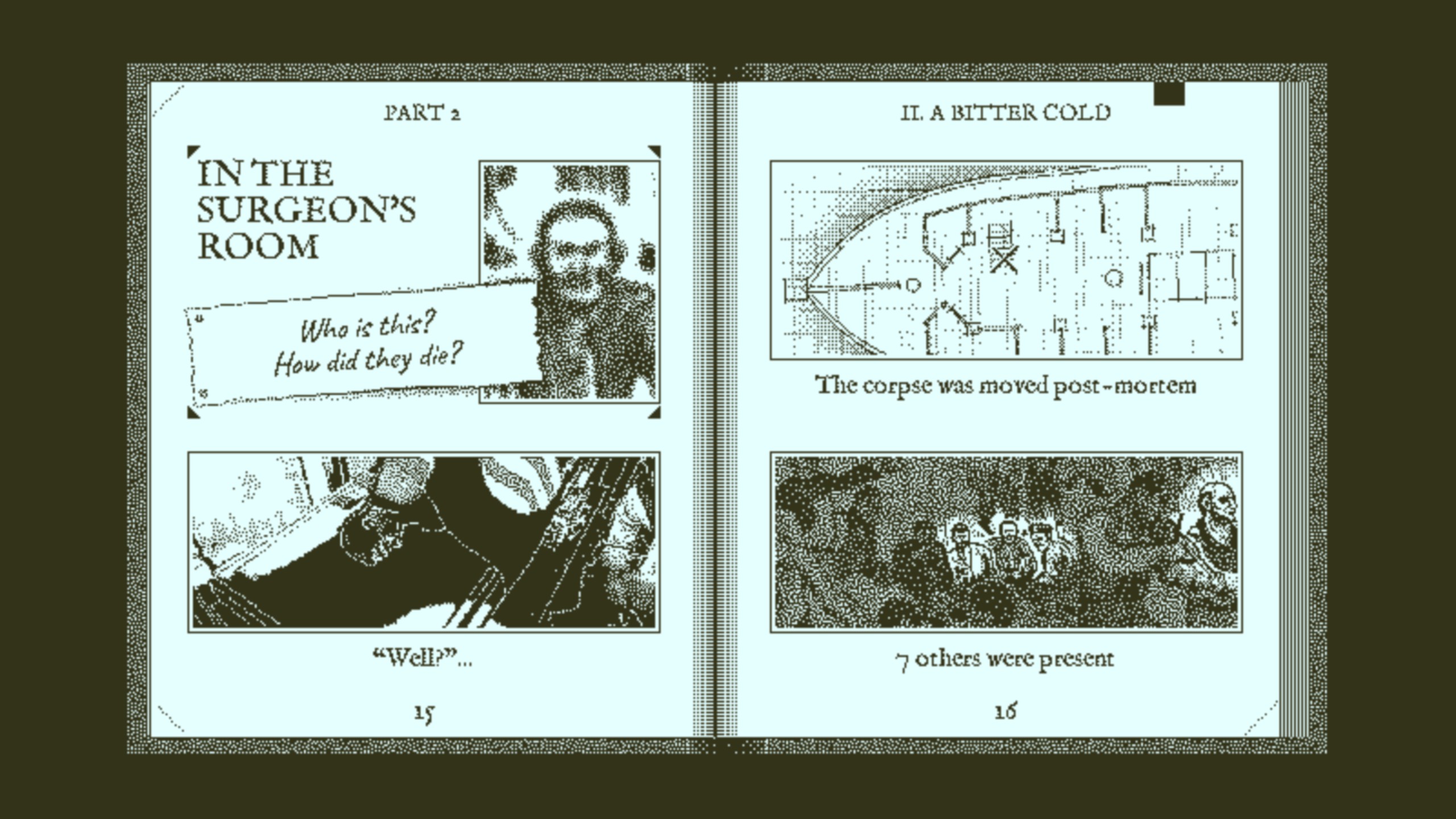
Beyond linguistics, another major criticism I have of the game is that it's too easy to lock in your translation, and the game keeps track of everything in a way that makes it easy to guess. I think that increasing the possibilities per page in the notebook would make it more rewarding to figure out. Mark Brown of Game Makers Toolkit points out that this system is similar to Return of the Obra Dinn, I agree with him that a version of the game entirely based on your deductions and intuitions would be interesting. Unlike Return of the Obra Dinn, which is a mystery game where you can only lock in your guess if you have chosen the right person, their rank, and cause of death, Chants of Sennaar’s puzzles are a drag and drop matching glyph to picture of it’s meaning. In Return of the Obra Dinn, every person has 3 pieces of information you need. The notebook mechanic which locks your answers in is similar, but because a world only has one meaning (sometimes two but it’s never particularly meaningful), the difficulty is lowered.
[
[
Another criticism I have is the world design. The sewers in the 3rd layer are too complicated to traverse and too confusing and identical without a community-made map. The final area feels rushed and easy. Using computer puzzles to match every language is fun, I think that the idea of a Rosetta stone puzzle would work very well, but the way it is, it is just a match three game, with very little actual thinking.
Unfortunately, the game is very text-based. This is not a problem with the game, it is an unfortunately limitation of gameplay, but it means that the game cannot model real-life linguistics. Speech and the way the spoken word works is missing from the game, and given its themes of misunderstanding, language barriers, etc… I believe that it’s a shame that the game lacks voice acting here. The abstractly cartoonish babbling of the people of the towers is meaningless and detracts from the overall theme of understanding through language, because there is no way to understand them.
Conclusion
Overall, it is an enjoyable game, and I would recommend it for people who want a different experience with games. Even if my criticism appears harsh, I feel like players would get a lot out of it, especially if they know other languages or like deduction based puzzles. Chants of Sennaar is a really good game to develop your own games criticism, and I hope that it inspires further language based games.
For further critique’s of language puzzle games, conlang enthusiest jan Misali’s video games about learning languages is a interesting watch.: https://www.youtube.com/watch?v=xybuMrbR86k